Chapter Two: Lions Dancing in Unexpected Places
Lunar New Year in Tasmania
One Nóng Lì Xīn Nián (Lunar New Year), while exploring the streets of Hobart, we heard the steady beat of drums echoing down a narrow lane. Following the sound, we turned a corner and found ourselves surrounded by colour and movement. Two lions, bright and full of life, leapt and twisted across the crowd enveloped stage. Their eyes blinked playfully, their heads nodded in rhythm, and every motion seemed to pulse with energy.
The air was thick with the scent of firecrackers and the soft smoke that drifted through the street. Children clapped, people laughed, and for a moment, it felt as though we were back in China again. That same festive warmth, joyful and alive, wrapped around us like a memory.
Connecting with Home
Lions have long held a special place in Chinese culture, symbolising yǒng qì (courage), strength, and protection. Yet real lions were never native to China. They arrived centuries ago through stories, art, and cultural exchange along the Silk Road, and over time became inseparable from Chinese celebration.
Growing up, lion dances were always part of life. They marked the beginning of a new year, the opening of a shop, or the union of two families. But the performance we witnessed in Hobart felt different. It was more than nostalgia; it was connection. Seeing people from many cultures standing together, all equally captivated, filled me with quiet pride. It reminded me that traditions have a way of travelling. They move quietly, carried in music, in colour, and in spirit, finding new places to belong.
Beware the Year Beast
The origins of the lion dance reach deep into Chinese folklore. Long ago, a mythical creature called Nián Shòu (the Year Beast), was said to appear at the end of each year, spreading fear and chaos. The people discovered that Nián was afraid of fire, loud sounds, and the colour red.
So they lit firecrackers, banged drums, and dressed in bright red garments to protect their homes. Over time, this act of courage became a joyful tradition. The lion dance was born, a celebration that drives away misfortune and welcomes prosperity with sound and motion.
Guardians at the Gate
On a later visit to China, we explored a movie set built to resemble an ancient city. Before each grand palace stood a pair of stone lions, the shǒu hù shén (guardians) of the household. The male lion rested a paw on a carved ball, his expression proud and protective. The female gently cradled a cub, her gaze watchful and graceful. Though silent and still, their presence felt alive, a quiet strength that watched over every entrance.
A Lion’s Watchful Spirit
From temple gates to festival parades, lions have remained protectors in Chinese tradition, their presence a promise of peace, strength, and renewal.
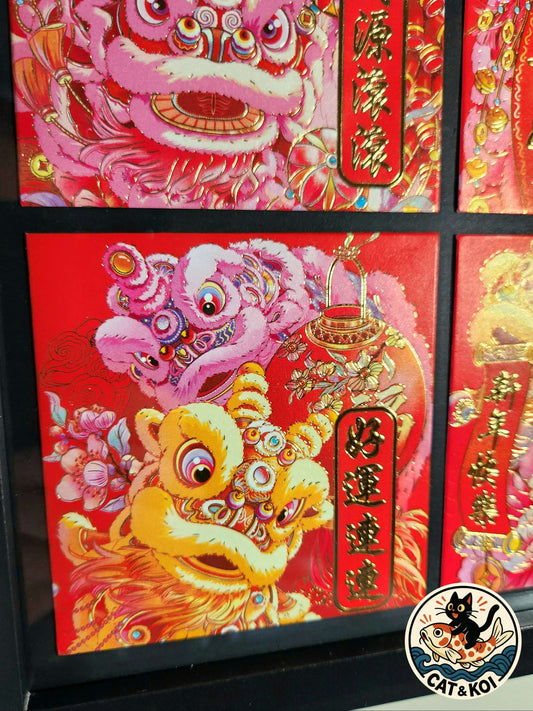
That spirit inspired our Lion Dance (Wǔ Shī) Wall Art, a design created to capture the same sense of energy and protection. Each of its six detailed scenes reflects the rhythm and colour of the traditional dance, celebrating courage, festivity, and harmony.
Sitting quietly in our entrance hall, the Lion Dance wall art reminds us of the warm connection we felt in Tasmania and the enduring legend of the Year Beast. Just like the stone guardians, it sits there patiently watching over our home.